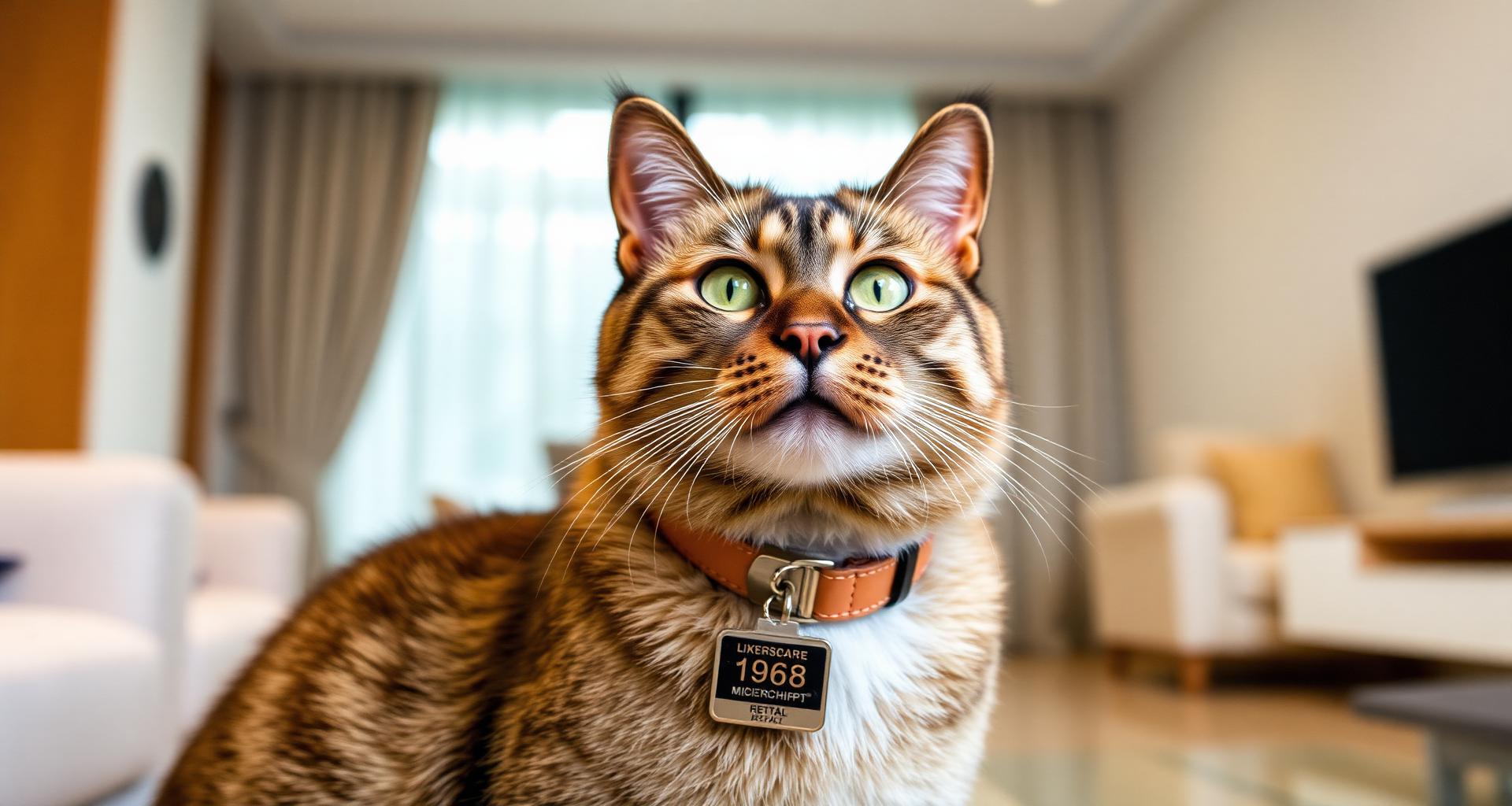
Every pet cat in Singapore must now be microchipped and licensed with the Animal & Veterinary Service (AVS). The two-year transition period ran from 1 September 2024 to 31 August 2026, so from 1 September 2026 it is an offence to keep an unlicensed pet cat. This guide sets out the current rules, fees and ownership limits as published by AVS, so you can plan before you bring a kitten home.
Checked 2 November 2026 against AVS pages updated 17 September to 19 October 2026 and the NParks transition reminder of 18 July 2026. Rules and fees can change, so always confirm on the official AVS pages linked below before you apply.
Key Takeaways
- Licensing is compulsory for every pet cat, whether bought or adopted. Apply on the Pet Animal Licensing System (PALS) at [pals.avs.gov.sg](https://pals.avs.gov.sg)
- Microchip first: your cat must be microchipped before you apply
- First-time applicants must complete AVS's free one-time online pet ownership course
- HDB flats: up to two cats per flat, plus one dog of an approved breed
- Private premises: up to three cats and/or dogs in total
- Fees depend on sterilisation: a sterilised cat can have a one-time lifetime licence for S$35; unsterilised cats cost much more to license
- Sterilisation is strongly encouraged but not mandatory
The Cat Management Framework at a Glance
AVS introduced cat licensing on 1 September 2024 under the Cat Management Framework, which also made it possible to keep cats in HDB flats. During the transition period, licences were issued free. That period has now ended, and licence fees apply from 1 September 2026.
▸Cat-keeping requirements (all homes)
AVS requires licensees to:
- Keep the cat in a safe environment and take reasonable steps to protect it from hazards, including installing mesh, grilles, screens or other barriers to prevent roaming or falls from height
- Keep the cat under physical control in public, for example on a harness or in a carrier, and not let it roam freely
Ownership Limits
▸HDB flats
Up to two cats, as well as one dog of an approved breed, may be kept in any HDB residential unit. AVS notes a fine of up to S$4,000 for failing to comply with HDB's rule.
▸Private premises (condo, landed, industrial or commercial)
A maximum of three cats and/or dogs in total per premises, for example three cats, or two cats and one dog. Condominium by-laws may add their own rules.
▸Owners who already had more cats
AVS allows owners who were keeping more cats than the limit before 1 September 2024 to keep all those existing cats, provided they licensed them during the transition period and continue to care for their health and welfare. This exception does not cover cats newly acquired during the transition period, such as cats bought from pet shops. Owners who did not license their existing cats by 31 August 2026 can only license and keep up to the normal limits. If you are already above the limit, AVS says you should not take on more cats.
▸Exceptions need confirmation before you commit
Private-premises owners who want to keep more than three cats and dogs combined must seek AVS approval in advance. AVS considers applications individually; paying a licence fee does not itself grant approval to exceed the limit.
The separate approved-fosterer pilot is for authorised fostering. It does not raise the ordinary household limit for every buyer. Read AVS's conditions rather than assuming that keeping or buying additional cats qualifies.
Sources: AVS (updated 19 October 2026; private-premises approval to exceed the limit); NParks (published 18 July 2026; approved-fosterer pilot).
Licence Fees from 1 September 2026
AVS lists these fees for cats and dogs not kept on a farm. Fees are shown before the 10% rebate AVS gives for payment via GIRO, online or AXS.
| Cat | One-year | Two-year | Three-year | One-time (lifetime) |
|---|---|---|---|---|
| Below five months old | S$15 | — | — | — |
| Sterilised (first three cats/dogs) | S$15 | S$25 | — | S$35 |
| Not sterilised (first three cats/dogs) | S$90 | S$165 | S$230 | — |
| Fourth and subsequent cat/dog | S$180 | S$325 | S$460 (not sterilised) | S$460 (sterilised) |
- A reduced fee applies to a fourth cat only if it is sterilised and adopted from an AVS animal welfare rehoming partner.
- A three-year licence for an unsterilised cat automatically changes to a one-time licence when you update the cat's sterilisation status.
- Licences issued free for unsterilised cats during the transition period are chargeable on renewal. Sterilised cats licensed during the transition received free one-time licences with lifetime validity.
Example (AVS's own illustration): one sterilised cat costs S$35 for a one-time licence, while one unsterilised cat costs S$230 for a three-year licence that must be renewed.
Source: AVS
Before You Apply
▸1. Microchip your cat
Microchipping is required before licensing. Costs vary between veterinary clinics, so check with your clinic first. See AVS.
▸2. Complete the pet ownership course
All first-time cat licence applicants must complete AVS's free, one-time online pet ownership course.
▸3. Decide on sterilisation
Sterilisation is not mandatory, but AVS strongly encourages it: it prevents unwanted breeding, reduces the risk of certain cancers and makes caterwauling and roaming less likely. It also makes licensing far cheaper. Lower-income households can check eligibility for AVS's Pet Cat Sterilisation Support programme at go.gov.sg/avs-pcss.
How to Apply on PALS
- Go to pals.avs.gov.sg and log in with Singpass
- Enter your cat's details, including the microchip number
- Choose the licence type and pay the fee
- Keep your details up to date, for example when you move house
AVS publishes step-by-step PALS guides on its licensing help page.
Pet Abandonment
Pet ownership is a lifelong commitment. Abandoning a pet is an offence under the Animals and Birds Act.
Frequently Asked Questions
Q: Is the licensing deadline still coming up?
A:No. The transition period ended on 31 August 2026. From 1 September 2026 it is an offence to keep an unlicensed pet cat.
Q: How much does a cat licence cost now?
A:For a sterilised cat (one of your first three cats/dogs), S$15 for one year, S$25 for two years or S$35 for a one-time lifetime licence. For an unsterilised cat, S$90, S$165 or S$230 for one, two or three years. Kittens under five months: S$15 for one year. These are before AVS's 10% rebate for GIRO, online or AXS payment.
Q: Can I keep three cats in my HDB flat?
A:For ordinary pet ownership, the HDB limit is two cats. The transition arrangement covers qualifying cats owned before 1 September 2024 and licensed by 31 August 2026; it is not permission to buy another cat above the limit. AVS also has a separate scheme for approved fosterers, with its own eligibility and conditions. Check your situation with AVS before committing to another cat.
Q: Is sterilisation mandatory?
A:No, but AVS strongly encourages it, and sterilised cats cost much less to license.
Q: Do adopted cats need a licence too?
A:Yes. All pet cats, whether purchased or adopted, must be licensed.
Q: Do I need to license community cats I feed?
A:No. Only pet cats need a licence; AVS encourages caregivers to register community cats for traceability.
Official Resources
Quick Access Links
- AVS: Licensing of cats (requirements and fees): avs.nparks.gov.sg
- AVS: Cat ownership limits: avs.nparks.gov.sg
- AVS: Limits of ownership (private-premises approval to keep more than three cats and dogs): avs.nparks.gov.sg
- AVS: Applying for and managing licences (transfers and address updates): avs.nparks.gov.sg
- NParks: transition period reminder (18 July 2026), including the approved-fosterer pilot: nparks.gov.sg
- AVS: Microchipping of cats: avs.nparks.gov.sg
- PALS licensing portal: pals.avs.gov.sg
- Pet Cat Sterilisation Support: go.gov.sg/avs-pcss
Buying a Licensed Kitten: Check the Handover
Ask whether the kitten already has an AVS licence and confirm that its microchip number matches its records. A microchip alone is not the same as a completed licence transfer.
The current licensee starts the transfer in PALS. The new licensee receives a request to accept or reject it; AVS sends a notification when the transaction is complete. Complete the first-time pet ownership course if it applies to you, and check that the finished record reflects the correct keeper and address.
If the address where a licensed cat is kept changes, AVS requires you to update it within 28 days. Use the official PALS portal and keep the completion notification with your kitten's documents.
Source: AVS (updated 13 October 2026, checked 2 November 2026). You can visit us to see how the handover works, and our pedigree and health standards page lists the documents every kitten comes with.
How Designer Cats Helps
Every Designer Cats kitten leaves microchipped, and we handle the AVS licence transfer as part of the sale. If you have not yet done the pet ownership course, ask us at your viewing and we will point you to it.
Last updated: 2 November 2026. Checked 2 November 2026 against AVS pages updated 17 September to 19 October 2026.
Continue Your Learning
Explore these related guides for more helpful information:
Related Guides You'll Love
Continue reading:
What are the cat rules in Singapore from 1 September 2026?
Every pet cat in Singapore must now be microchipped and licensed with AVS. The transition period ended on 31 August 2026, so keeping an unlicensed pet cat is an offence from 1 September 2026. HDB flats may keep up to two cats.
The rules in short
- Microchip first: the cat must be microchipped before you apply for a licence.
- First-time applicants must complete AVS's pet ownership course.
- HDB flats: up to two cats per flat.
- Private homes: up to three cats and dogs in total (for example, two cats and one dog), not three cats plus dogs.
- Pets already licensed in excess of these limits during the transition may have exceptions. Check AVS's ownership-limits page.
Licence fees
Fees depend on the cat's age, whether it is sterilised and the licence length. Sterilised cats cost much less to license, and AVS lists a separate annual fee for kittens under five months. The fees are listed before any eligible rebate. Always check the current AVS fee table before applying, as fees can change.
Ordinary limits and the exceptions
- HDB flats: up to two cats, plus one dog of an approved breed. Private premises: up to three cats and/or dogs in total.
- Owners who were keeping more cats than the limit before 1 September 2024 may keep those existing cats if they licensed them by 31 August 2026. Cats newly acquired during the transition, such as pet-shop purchases, are not covered.
- Private-premises owners who want to keep more than three cats and dogs combined need AVS approval in advance; paying a licence fee does not itself grant approval.
- The approved-fosterer pilot is a separate scheme for authorised fostering with its own conditions. It does not raise the ordinary household limit for buyers.
How a licence transfer works
- The current licensee starts the transfer in PALS. The new licensee receives a request and accepts or rejects it.
- AVS sends a notification when the transaction is complete. Keep that confirmation with the kitten's documents.
- A microchip identifies the cat; on its own it is not proof that the licence or ownership has transferred.
- If the address where a licensed cat is kept changes, AVS requires an update within 28 days.
When you buy from us
Every Designer Cats kitten is microchipped, and we handle the AVS cat licence transfer as part of the sale. Ask us at the viewing if you have not yet completed the pet ownership course.
Sources
- AVS: Licensing of cats (updated 17 Sep 2026) (checked 2 November 2026)
- AVS: Limits of ownership (updated 19 Oct 2026) (checked 2 November 2026)
- AVS: Applying for and managing licences (updated 13 Oct 2026) (checked 2 November 2026)
- NParks: transition period reminder (published 18 Jul 2026) (checked 2 November 2026)
- AVS: Microchipping of cats (updated 1 Sep 2026) (checked 22 October 2026)
Last reviewed 2 November 2026 by the Designer Cats team.
Continue in the Choosing a Cat guide
This article is one chapter of a larger Singapore guide. The hub links every related chapter in reading order.
Open the Choosing a Cat hub- Best breed of cat to own in SingaporeBreed shortlists matched to Singapore homes and lifestyles.
- Friendliest and calmest cat breeds in SingaporeWhich breeds are most sociable, quiet and easy to live with.
- How much does a kitten cost in Singapore?Purchase price plus the monthly maintenance owners underestimate.
- Where can I buy a kitten in Singapore?Licensed catteries, adoption and what to verify before paying.
- Before you buy a kittenHealth records, pedigree papers and cattery due diligence.
- Finding your kitten matchMatching personality, not just looks, to your household.
References & Authoritative Sources
Written by our editorial team from the authoritative veterinary, government and registry sources listed below. For a concern about your own cat, please speak to a veterinarian.
- Animal & Veterinary Service (AVS), Singapore — Pet licensing & welfare standards
- WSAVA Vaccination Guidelines — Global feline vaccination protocol
- AAFP Feline Life Stage Guidelines — Veterinary care across life stages
- Cat Fanciers' Association (CFA) — Breed standards & registry
- The International Cat Association (TICA) — Breed standards & registry
- FIFe — Fédération Internationale Féline — International breed standards