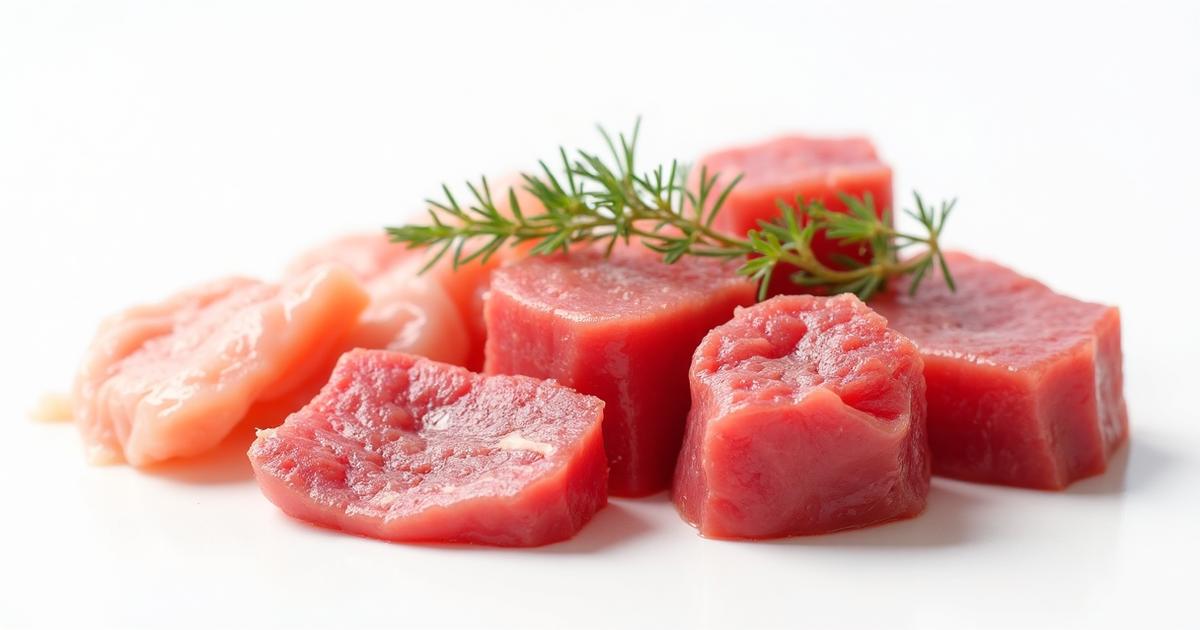
Raw cat food is safe for healthy cats when it is kept frozen, thawed correctly, served within a few hours and handled with the same hygiene you would use for your own raw meat. Singapore's heat and humidity shorten every safety window, so the details below matter more here than in temperate countries.
The three risks worth taking seriously
- Bacterial growth after thawing. Once meat is above chiller temperature, bacteria multiply quickly. In an air-conditioned Singapore flat that clock runs faster than most feeding guides assume.
- Cross-contamination in the kitchen. The realistic risk is not your cat — it is the chopping board, the bowl and your hands.
- Nutritional imbalance, not pathogens, is the most common problem with home-made raw. Meat alone is not a diet; it needs bone for calcium and offal for organ nutrients.
Storage and thawing timings we give every customer
| Stage | What to do | Time limit |
|---|---|---|
| Freezer | Keep packs frozen until the day of feeding | Use within stated shelf life |
| Thawing | Chiller overnight, or unopened pack in warm water | 10–15 minutes in warm water |
| Chiller (thawed) | Reseal the balance of the 200g pack | Consume within a few days |
| Served in the bowl | Room temperature, air-conditioned room | Remove after 3–4 hours |
| Refreezing | Do not refreeze thawed food | Never |
Never microwave raw food. Heating partially cooks the edible bone, which changes its texture and makes it less suitable to eat.
Hygiene routine that removes almost all the risk
- Wash hands before and after preparing meals.
- Use a dedicated bowl and utensils for the cat, washed in hot soapy water after every meal.
- Wipe down the prep surface after portioning.
- Store raw packs below ready-to-eat food in the freezer and chiller.
- Deworm monthly while raw feeding — this is the same advice we give owners of every Designer Cats kitten.
Cats and households that should choose cooked instead
Raw is not the right answer for everyone. Choose gently cooked food if your household includes:
- An immunocompromised cat, or one recovering from illness
- Very young children or elderly family members handling the bowls
- Anyone uncomfortable with handling raw meat daily
Our Cooked Gourmet cat food range uses the same 80% meat, 10% bone and 10% offal ratio, gently cooked at low temperature — the safety profile of cooked food with the ingredient quality of raw.
How our packs are built for the Singapore cold chain
Designer Cats Raw Gourmet is made locally in small weekly batches, frozen immediately and delivered island-wide in insulated packaging on Monday, Wednesday and Friday. Packs are 200g — roughly two to three servings for an adult cat — so you thaw small amounts frequently instead of holding a large thawed batch in the chiller.
Frequently asked questions
Can raw food make my cat sick?
Healthy cats have short, acidic digestive tracts that handle raw meat well. The practical risks come from broken cold chain and poor kitchen hygiene, both of which are controllable.
How long can raw food sit out in Singapore?
Three to four hours in an air-conditioned room. Discard anything left after that.
Is halal certification relevant to safety?
It speaks to sourcing and handling discipline rather than pathogen control, but it does mean the meat is human-grade and traceable — which is what you actually want to see in a raw supplier.
Ready to start? Browse Raw Gourmet flavours or read our portion guide next.
Continue Your Learning
Explore these related guides for more helpful information:
Related Guides You'll Love
Continue reading:
Continue in the Cat Nutrition guide
This article is one chapter of a larger Singapore guide. The hub links every related chapter in reading order.
Open the Cat Nutrition hub- Raw vs gently cooked cat foodThe trade-offs between the two fresh feeding approaches.
- Raw feeding guideSafe handling, balance and portioning for raw diets.
- How much raw food to feed a catDaily grams by ideal body weight for kittens, adults and seniors.
- Raw cat food cost in SingaporeCost per day and month against premium kibble and canned food.
- Cooked cat food vs kibbleMoisture, meat content, digestibility and cost compared.
- Kitten feeding scheduleGrowth-stage portions and meal frequency.
References & Authoritative Sources
Written by our editorial team from the authoritative veterinary, government and registry sources listed below. For a concern about your own cat, please speak to a veterinarian.
- Animal & Veterinary Service (AVS), Singapore — Pet licensing & welfare standards
- WSAVA Vaccination Guidelines — Global feline vaccination protocol
- AAFP Feline Life Stage Guidelines — Veterinary care across life stages
- Cat Fanciers' Association (CFA) — Breed standards & registry
- The International Cat Association (TICA) — Breed standards & registry
- FIFe — Fédération Internationale Féline — International breed standards